
AI Doesn’t Replace Discipline — It Rewards It
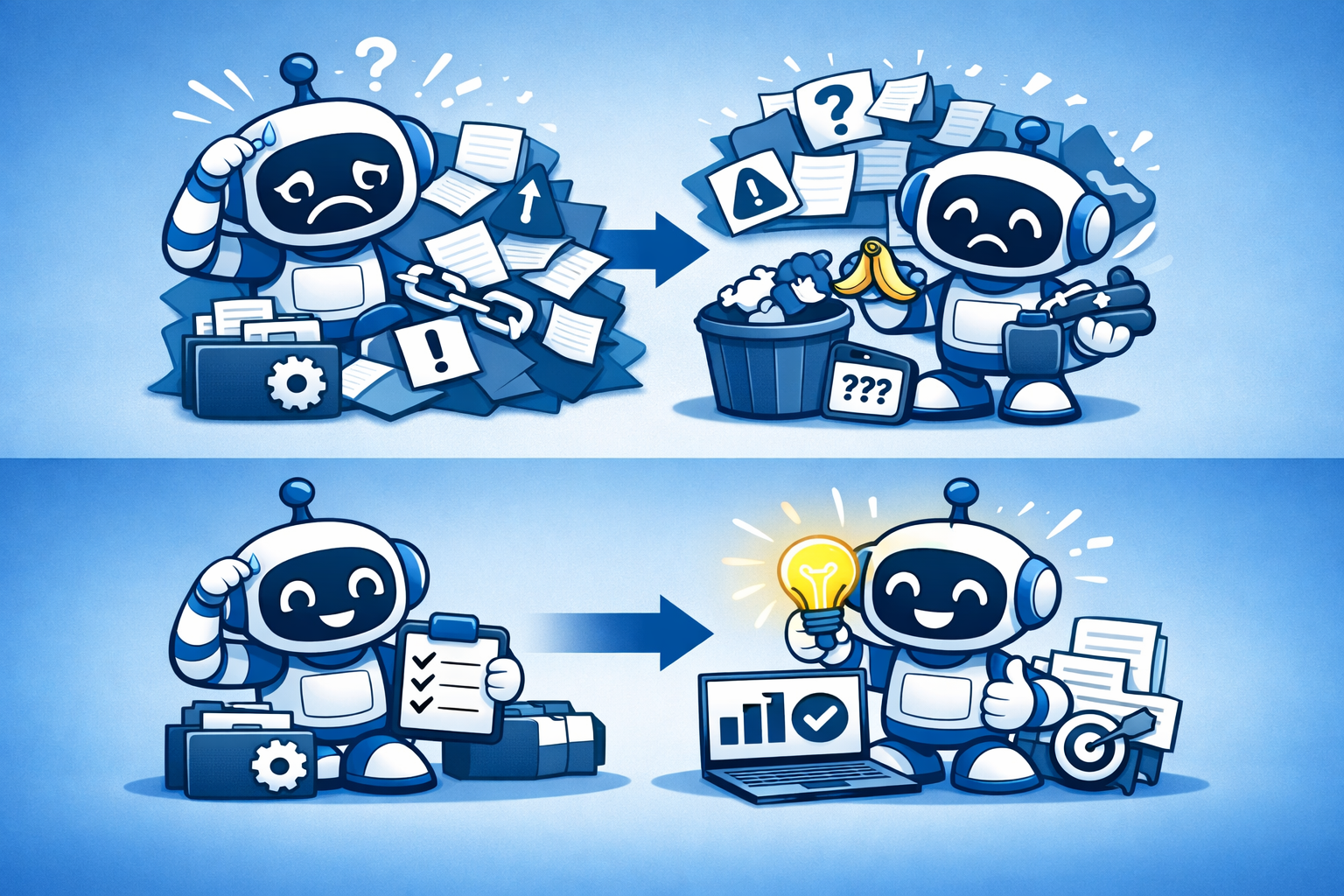
Everyone keeps saying AI will “figure things out for us,” but here’s the uncomfortable truth: AI doesn’t remove the need for structure. It actually makes structure even more important. When your content is clean, current, and organized, AI becomes a force multiplier. When your content is messy, outdated, or inconsistent, AI just multiplies the chaos.
Here’s what we’re seeing:
AI depends on structured content. It cannot guess which version is correct, what is authoritative, or what is outdated. It reads whatever signals we give it, like metadata, hierarchy, naming, and governance. Read only archive libraries in SharePoint sites? Might need to rethink that strategy!
Processes matter more than ever. AI thrives on patterns. When teams follow consistent workflows for drafting, reviewing, approving, and publishing, AI can actually understand the landscape. Without that consistency, everything turns into noise. (And yet another reason to avoid storing team files in OneDrive.)
Risk goes up when structure disappears. AI can surface sensitive or stale content that used to stay buried simply because everything was a mess. Good governance is not optional anymore. It is a safety net.
Organizations that are succeeding with AI are not those with the most tools. Those with strong information architecture, clear boundaries, and a clean content foundation stand to benefit.
AI is not a shortcut around discipline. AI multiplies whatever discipline you already have. If we want reliable answers, safer outputs, and real acceleration, we need to invest in structured content and defined processes instead of abandoning them.
At Forte Design, we help organizations build the structure and clarity needed to make AI truly effective. We focus on defining processes, organizing content, and creating the operational foundations that AI appreciates. For 15+ years, we’ve delivered practical and scalable solutions across Microsoft 365, Copilot, and Power Platform, improving collaboration, streamlining operations, and turning scattered enterprise knowledge into AI‑ready insight.